

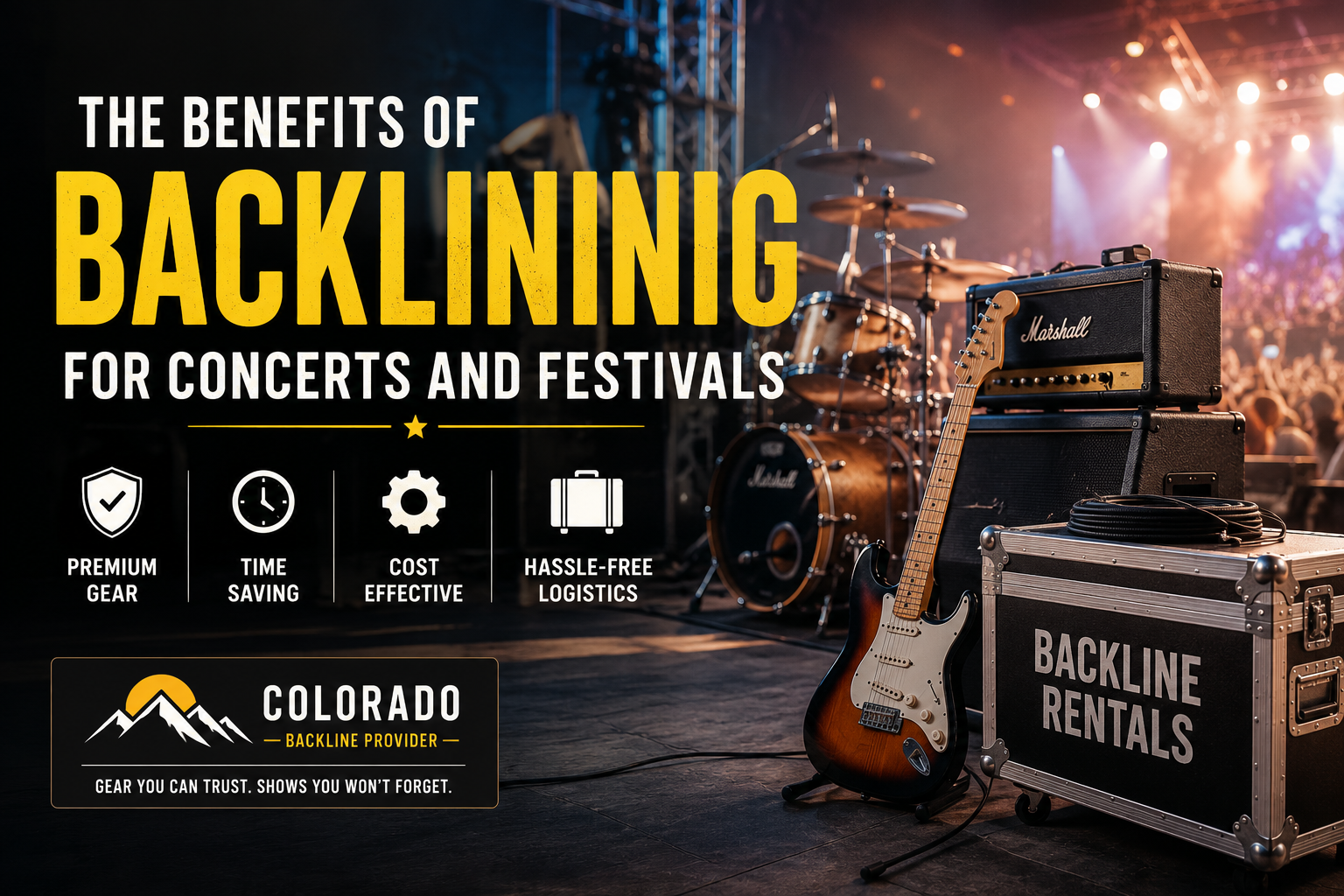
Anyone who’s worked behind the scenes at a live show knows how much can go wrong before a single note gets played. Gear gets damaged in transit, equipment doesn’t match what a rider calls for, and load in times get eaten up by bands trying to set up amps and drum kits that were never designed to travel well in the first place. Backlining solves a lot of these problems, and it’s a big reason touring shows and festivals run as smoothly as they do.
If you’re not familiar with the term, here’s what backlining actually means, why it matters, and how working with a company that specializes in it can make a real difference for a venue, promoter, or touring act.
What Is Instrument Backlining
Backlining refers to providing shared instruments and equipment, amplifiers, drum kits, keyboards, cabinets, that bands use during a performance instead of hauling their own gear from city to city. Instead of every act on a festival bill bringing a full backline setup, a backlining company supplies quality, well-maintained equipment that gets set up on stage and used by whichever artist is performing.
This is especially common on multi-act bills, where turnaround time between sets is tight, and there’s no realistic way for five different bands to each load in and load out their own full backline. Instead, the gear stays put, and only the smaller personal items, guitars, pedalboards, cymbals, get swapped between acts.
Why Touring Bands and Festivals Rely on Backlining
There are a handful of reasons backlining has become such a standard part of live production, and none of them are really optional once you understand what’s at stake for a show.
It saves an enormous amount of time.
Load in and load out are two of the biggest bottlenecks at any multi act show. If every band had to bring, set up, and break down its own full backline, festival schedules would need to be twice as long. Shared backline gear that stays on stage between sets cuts changeover time down dramatically, which matters a lot when a festival is trying to keep six stages running on schedule all day.
It protects gear from the wear and tear of travel.
Amplifiers and drum kits are not built to survive being loaded in and out of a van every single night on a national tour. Backlining lets touring musicians travel light, often with just their instruments and a few personal items, while relying on properly maintained gear at each stop instead of dragging their own equipment through the wear and tear of constant travel.
It reduces the risk of equipment failure mid show.
A backline company that maintains its gear properly means bands are working with amps and kits that have actually been checked, tuned, and tested before doors open. That’s a big deal compared to gear that’s been rattling around in a trailer for three weeks straight.
It simplifies the technical rider process.
Riders can get incredibly specific about amp models, drum kit specs, and cabinet configurations. A good backlining company works directly from the rider to make sure the gear on stage actually matches what the artist requested, instead of leaving a tour manager to negotiate substitutions at the last minute.
It cuts down on transportation costs.
Renting or providing local backline instead of shipping a full backline setup with the tour saves significantly on trucking and logistics, which matters for both promoters and the acts themselves, especially on tours hitting a lot of cities in a short window.
What Makes a Good Backlining Company
Not every backline provider operates at the same level, and the difference tends to show up in a few specific areas.
- Equipment quality and maintenance. Gear should be professional grade and properly serviced between shows, not just whatever happens to be sitting in a warehouse.
- Rider accuracy. A good provider reads riders carefully and sources exact equipment matches whenever possible, rather than offering the closest thing available.
- Reliability under time pressure. Festival schedules don’t leave room for gear that shows up late or doesn’t work as expected. Dependability matters as much as equipment quality.
- Local knowledge. Providers who understand the venues and festival grounds in a specific region tend to move faster and run into fewer surprises than an out of town company unfamiliar with the space.
How Kaleidoscope Productions Handles Backlining in Colorado
Kaleidoscope Productions provides instrument backlining for concerts and festivals throughout Colorado, working directly with venues, promoters, and touring acts to make sure the right gear is on stage and ready to go before doors open. Rather than offering a generic equipment package, the team works from each act’s technical rider to match amps, drum kits, and cabinets to what’s actually being requested, cutting down on last-minute scrambling during load-in.
For festivals with tight turnaround times between sets, having a local Colorado backline provider who knows the venues and stages across the state makes a real difference. Kaleidoscope’s familiarity with Colorado’s concert and festival circuit means less time lost to unfamiliar load in logistics and more time keeping the schedule on track, which matters just as much to a promoter trying to keep a full day of programming running smoothly as it does to a touring band trying to get a clean soundcheck in before doors.
The Bottom Line
Backlining isn’t just a convenience, it’s one of the quieter pieces of infrastructure that keeps live music running on schedule. For touring acts, it means less wear on personal gear and a lighter load between cities. For festivals and promoters, it means faster changeovers and fewer technical surprises once the show is underway. Working with an experienced local provider, like Kaleidoscope Productions in Colorado, means that infrastructure is handled by people who actually know the venues, the schedules, and what it takes to keep a stage running smoothly from the first act to the last.
